
Cesarean section, commonly called a C-section, is a surgical procedure used to deliver a baby through an incision in the mother’s abdomen and uterus. Cesarean Section in Saudi Arabia, C-sections are commonly performed in both government and private hospitals equipped with advanced maternity units, modern operating rooms, and neonatal intensive care units (NICU).
In Saudi Arabia, medication for terminating a pregnancy (such as misoprostol or mifepristone) is only legally provided through authorized medical professionals and hospitals, and attempting to obtain or use abortion pills outside of a healthcare setting can be unsafe and may have legal consequences.
Major cities including Riyadh Cesarean Section in Saudi Arabia , Jeddah Cesarean Section in Saudi Arabia, and Dammam Cesarean Section in Saudi Arabia offer highly trained obstetricians, anesthesiologists, and round-the-clock emergency maternity services to ensure safety for both mother and baby. Read more our pages
This complete guide explains when a C-section is medically necessary, its risks and benefits, recovery timeline, cost in Saudi Arabia, insurance coverage, and services available for expatriates.
What Is a Cesarean Section?
A Cesarean section is a surgical birth performed when vaginal delivery is not safe or possible. The procedure typically takes 30–60 minutes and is done under regional (spinal/epidural) or general anesthesia.
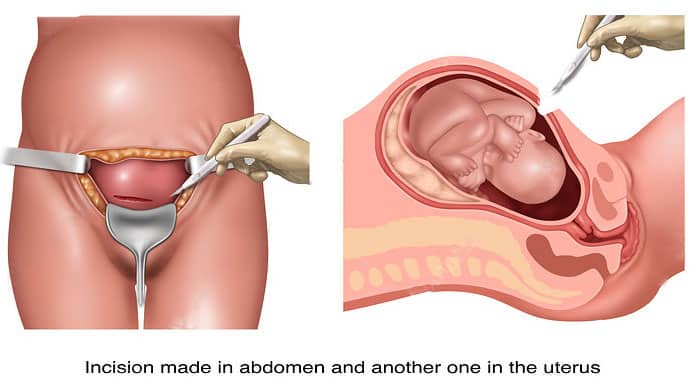
There are two types:
Planned (Elective) C-Section
Emergency C-Section
Both are performed in sterile operating environments with continuous fetal monitoring.
When Is a C-Section Medically Necessary?
A C-section is recommended when vaginal delivery may pose risks to the mother or baby.
Common medical reasons include:
Breech or transverse baby position
Placenta previa (placenta covering the cervix)
Fetal distress (baby not receiving enough oxygen)
Twin or multiple pregnancy
Previous uterine surgery
Failure of labor to progress
Severe maternal conditions (preeclampsia, uncontrolled diabetes, heart disease)
In emergency cases, a C-section can be life-saving.
Is Cesarean Section Safer for the Baby?
In complicated pregnancies, yes.
If the baby shows abnormal heart rate patterns, oxygen deprivation, or umbilical cord issues, surgical delivery may prevent birth injury.
For low-risk pregnancies, both vaginal delivery and C-section are generally safe. The safest method depends entirely on medical evaluation.
What Are the Risks of a C-Section for the Mother?
Because it is major abdominal surgery, potential risks include:
Infection
Excessive blood loss
Blood clots
Reaction to anesthesia
Injury to surrounding organs (rare)
Longer hospital stay
Scar complications
Hospitals in Saudi Arabia follow strict sterilization protocols and surgical safety standards, significantly reducing complications.
Is a C-Section More Painful Than Normal Delivery?
During surgery, anesthesia prevents pain. After delivery, abdominal soreness is common.
Compared to vaginal birth, recovery discomfort may last longer due to:
Surgical incision
Internal healing
Limited mobility in early days
Pain management medications are provided to ensure comfort.
How Long Do You Stay in the Hospital After a C-Section?
Most mothers stay 3 to 5 days.
Hospital stay depends on:
Recovery progress
Baby’s health
Presence of complications
Private hospitals may offer luxury maternity suites and extended stays.
How Long Does It Take to Recover from a Cesarean Section?
Full recovery generally takes 4 to 6 weeks.
Typical recovery timeline:
Week 1
Limited mobility
Incision tenderness
Assistance needed for daily activities
Weeks 2–4
Gradual improvement
Light walking encouraged
Reduced pain
After 6 Weeks
Most normal activities resume
Doctor clearance for exercise
Internal healing may continue for several months.
Doctors advise:
Avoid lifting heavy objects
Keep incision clean and dry
Walk gently to prevent clots
Attend scheduled follow-ups
What Care Is Needed After a C-Section Delivery?
Post-operative care includes:
Monitoring incision for redness or discharge
Taking prescribed antibiotics or pain relief
Eating protein-rich foods
Staying hydrated
Getting emotional support
Seek immediate medical care if you experience:
Fever above 38°C
Severe abdominal pain
Heavy bleeding
Foul-smelling discharge
Can I Choose a C-Section Without Medical Reason?
Some women request elective C-sections due to:
Fear of labor pain
Previous traumatic delivery
Scheduling convenience
However, most doctors recommend surgery only when medically necessary because it carries higher surgical risks than vaginal birth.
A detailed consultation with an obstetrician is essential before deciding.
Can You Have a Normal Delivery After a C-Section (VBAC)?
Yes, Vaginal Birth After Cesarean (VBAC) is possible for some women.
Eligibility depends on:
Type of previous uterine incision
Number of previous C-sections
Current pregnancy health
Doctors carefully evaluate the risk of uterine rupture before recommending VBAC.
Does C-Section Cause Problems in Future Pregnancy?
Most women have healthy pregnancies after one C-section.
However, multiple surgeries may increase risk of:
Placenta accreta
Placenta previa
Uterine scar complications
Close monitoring is recommended in future pregnancies.
How Many C-Sections Are Safe?
There is no strict limit, but many women safely undergo 2–3 C-sections.
Risk increases with each surgery, so decisions are made individually based on health condition and surgical history.
What Are the Long-Term Effects of C-Section?
Long-term complications are rare but may include:
Internal adhesions
Mild chronic abdominal discomfort
Increased likelihood of repeat surgical delivery
Regular follow-up and healthy lifestyle reduce risks.
Is C-Section More Expensive Than Normal Delivery in Saudi Arabia?
Yes. Costs are higher due to surgery, anesthesia, and longer stay.
Government Hospitals
Saudi citizens: Often free
Expats (self-pay): SAR 8,000 – 15,000
Private Hospitals Cesarean Section in Saudi Arabia: Cost,
SAR 13,000 – 25,000+
Depends on hospital, doctor, room category, and NICU usage
Does Insurance Cover C-Section in Saudi Arabia?
Most employer-provided insurance plans include maternity coverage for medically necessary C-sections.
Typically covered:
Surgeon fees
Operating room charges
Anesthesia
Hospital stay
Basic newborn care
Always confirm:
Coverage limit
Waiting period
Co-payment percentage
Approved hospital network
Facilities Available for Foreign Residents (Expats)
Expats in Saudi Arabia have access to:
Planned and emergency C-sections
Advanced fetal monitoring
NICU services
Post-surgical recovery units
English-speaking staff in many private hospitals
Coverage depends on insurance policy terms.
What Are the Signs You May Need an Emergency C-Section?
Emergency surgical delivery may be required if:
Baby’s heart rate drops
Severe maternal bleeding occurs
Labor stops progressing
Umbilical cord prolapse develops
Placental complications arise
Immediate medical action ensures safety.
Does C-Section Affect Breastfeeding?
Most mothers can breastfeed successfully after surgery.
Some may require assistance with positioning due to incision discomfort. Lactation consultants are available in many Saudi maternity hospitals.
Can I Travel After a C-Section?
Traveling after a C-section requires careful planning because it is a major abdominal surgery. Your body needs adequate time to heal before long-distance movement.
Most doctors recommend waiting at least 4 to 6 weeks before long-distance travel. This allows:
Proper wound healing
Reduced risk of blood clots
Improved mobility
Stabilized pain levels
For short local trips, travel may be possible after 1 to 2 weeks, provided:
You feel physically comfortable
There are no complications
Your doctor has approved it
If flying after a C-section:
Consult your doctor beforehand
Walk periodically during long flights
Stay well hydrated
Avoid lifting heavy luggage
Recovery and safety should always take priority over travel plans.
How Soon Can You Walk After a C-Section?
Walking is usually encouraged within 12 to 24 hours after surgery.
Early gentle movement helps:
Improve blood circulation
Reduce the risk of blood clots
Support bowel function
Speed up overall recovery
Initially, walking should be slow and assisted by nursing staff or a family member. During the first few weeks, avoid:
Climbing stairs frequently
Heavy lifting
Sudden twisting movements
Strenuous activity
Gradually increase your activity level as pain decreases and healing progresses. Always follow your doctor’s post-surgical instructions.
Is General Anesthesia Used in C-Section?
In most planned C-sections, spinal or epidural anesthesia is used. This numbs the lower body while allowing the mother to remain awake during delivery.
General anesthesia is typically reserved for:
Emergency C-sections
Situations where spinal anesthesia is not possible
Severe maternal or fetal complications
Spinal anesthesia is generally preferred because it allows:
Immediate skin-to-skin contact
Early breastfeeding initiation
Faster maternal bonding
An anesthesiologist will evaluate the safest and most appropriate option based on the mother’s medical condition and surgical urgency.
Final Thoughts
Cesarean section in Saudi Arabia is a safe, regulated, and widely available procedure when medically required. While recovery may take longer and costs may be higher than vaginal birth, modern hospitals maintain high surgical safety standards.
The safest delivery method should always be determined through medical evaluation, maternal health assessment, and fetal condition.